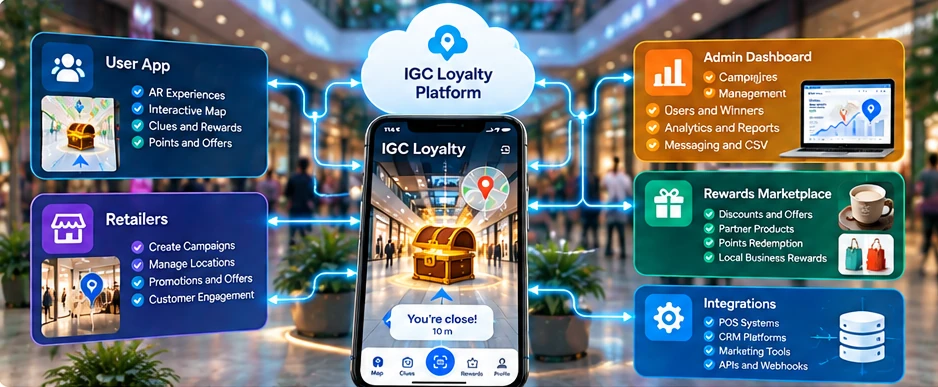
A loyalty management system architecture describes how a rewards platform connects its mobile experience, campaign controls, customer activity, points, redemption and reporting. Understanding these components helps retailers and their technology partners evaluate how a digital loyalty programme might work for a real business.
What is a loyalty management system architecture?
It is the structure of the services, interfaces and processes that move an offer from campaign setup to customer participation and, where applicable, reward redemption. A useful architecture separates the shopper experience from campaign administration and defines how points, eligibility, locations and activity records are handled.
Five core components of a digital loyalty platform
1. Customer mobile experience
Customers need a straightforward way to discover campaigns, understand eligibility, interact with locations and see rewards. IGC Loyalty uses a mobile treasure-hunt experience with clues, location-based activities and points.
2. Campaign and venue administration
Retailers and campaign operators need controls for promotional content, locations and participation. IGC Loyalty includes an administrative dashboard for campaign activity, messaging, winners and downloadable CSV reports.
3. Points and reward rules
A loyalty platform needs consistent rules for how points are granted, displayed and redeemed. For any particular campaign, rewards and their availability depend on the published conditions. IGC Loyalty has a points-based experience and rewards marketplace.
4. Location-aware engagement
Location-based campaigns connect digital prompts to physical venues. Users can follow a clue and map toward an activity, then interact with a location-based reward. This is useful for retail treasure hunt campaigns and other venue-led experiences.
5. Measurement and reporting
Campaign operators need visibility into participation and operational outcomes. Reporting should distinguish engagement metrics from confirmed visits or purchases rather than assuming every interaction led to a sale.
How the components work together
- A business defines a campaign, eligible locations and available rewards.
- The campaign becomes discoverable through the customer-facing experience.
- A participant follows the available clues or map and completes the specified interaction.
- The system applies campaign rules to points and rewards.
- Administrators review activity and campaign results for follow-up.
These connected experiences help retailers organise campaigns, reward participation and understand customer engagement.
Integration considerations for agencies and technology partners
Agencies evaluating loyalty platforms should consider user identity, permissions, campaign data, analytics, privacy, support responsibilities and how an implementation connects to a customer's existing systems. Delivery options can include partner-led rollouts, API-based connections and white label programmes depending on the scope of the deployment.
Partnership, API and white label options
Many organisations need more than a standalone campaign tool. Some want a partner who can help shape the rollout, some want APIs that connect loyalty activity with their own tools, and others want a fully branded deployment under their own identity.
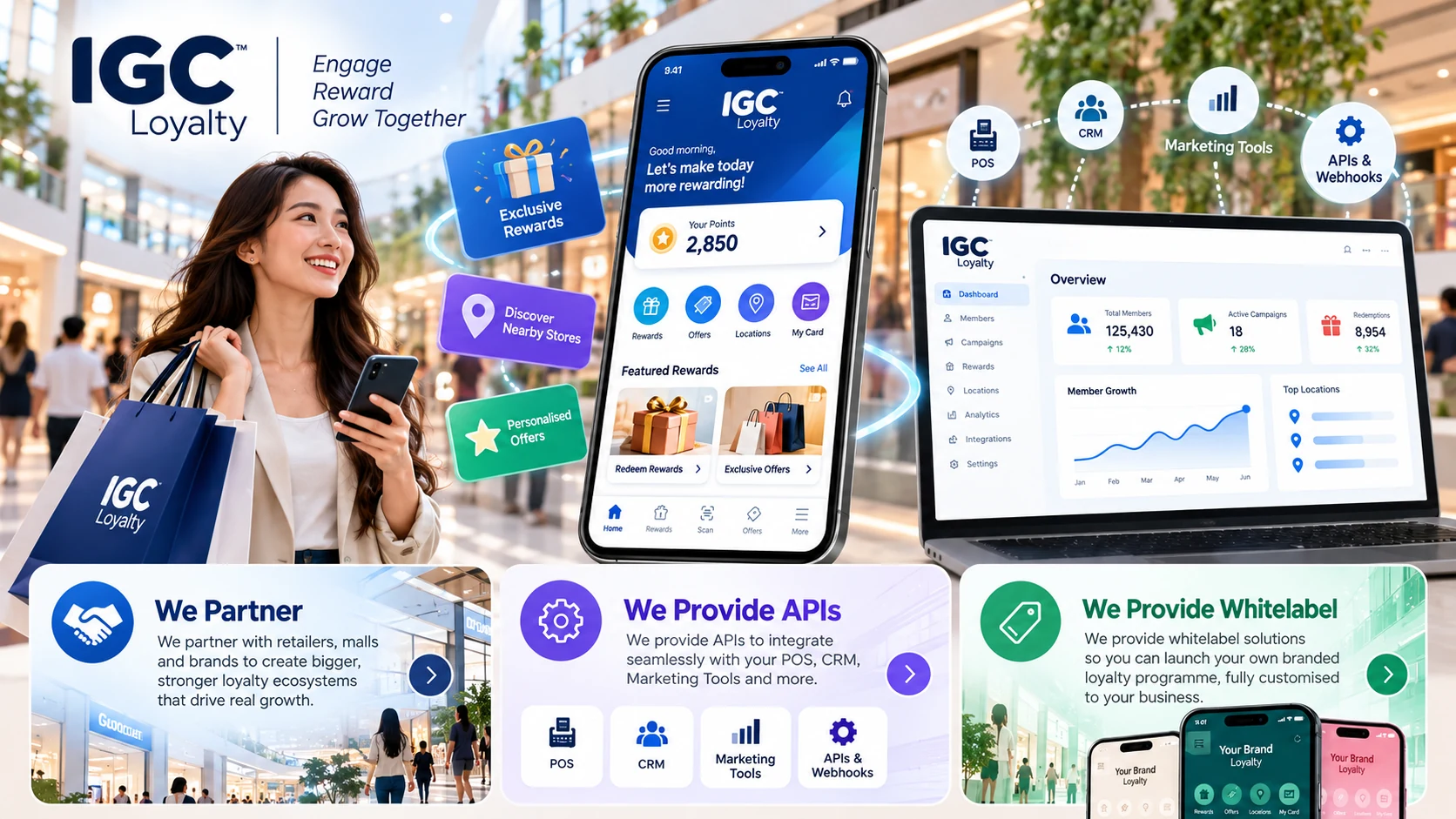
- We Partner: We work with retailers, malls, brands and agencies to build stronger loyalty campaigns and venue-led experiences.
- We Provide APIs: API and webhook pathways can support POS, CRM, marketing tools and connected operational workflows.
- We Provide Whitelabel: Businesses can launch a branded loyalty experience with their own look, campaign structure and customer journey.
If you are assessing delivery models for a client, franchise group or venue network, this approach helps align campaign design, customer engagement and operational reporting in one programme.
Architecture for small businesses versus larger programmes
A single retailer may start with a limited campaign and a few rewards, while shopping centres or regional programmes may coordinate several venues and offers. The same conceptual building blocks apply, but operational complexity, governance and reporting needs will differ.
For practical promotion ideas, see how to promote in-store discounts without paid ads, and explore our treasure hunt app.
Frequently asked questions
What are the main parts of a loyalty management system?
A mobile or web experience, campaign administration, eligibility and points rules, rewards, and reporting are common components.
Does a loyalty system need an API?
Not necessarily. APIs become important when businesses need verified integrations with existing tools, but a standalone experience can also support campaigns.
How does a location-based loyalty platform differ?
It connects eligible digital experiences or rewards to physical places, such as a store or participating venue, rather than relying exclusively on purchases.
Can agencies use this architecture for client campaigns?
Yes, as a planning framework. Agencies should confirm each platform's actual deployment options, responsibilities and integrations before making client commitments.
Explore IGC Loyalty: Read about retail campaigns, visit the FAQ, or contact the team to discuss a campaign or partnership.